05: The Threshold of a New Diagnosis
And the freedom of saying it out loud
This is an essay that wouldn’t exist if I had written this series three years ago—but in the time since, this topic has irrevocably changed the course of my life and my understanding of who I am at the most fundamental level. How’s that for a hook?
Which is also what makes this essay, by far, the most vulnerable one to write—and the only one I felt any hesitation in publishing.
It’s one thing for you to know about my history of burnout, that I’m a cancer survivor, or that I’ve been weighed down by crippling levels of perfectionism and imposter syndrome. But for many reasons—some of which I’ll share here—this one makes my heart skip a beat.

I used to think I was naturally a highly organized, type-A individual with an incredible attention to detail and a knack for keeping myself—and my life—on track at all times.
Many might call me neurotic. Freud would call me anal-retentive. My first-grade teacher did call me a “dreamboat.” My first therapist, whom I started seeing in eighth grade, offered the labels of OCD and generalized anxiety disorder.
I used to think I was an empath, with an ability to deeply understand and tune in to the emotional experiences of others, while also riding the steep (and sometimes abrupt) highs and lows of my own inner world.
Many might call me overly sensitive. Many have called me compassionate and a good listener. An article I read my freshman year of college offered the label highly sensitive person (HSP).
I used to think I was timid because somewhere between the ages of 10 and 12, my bubbly, free-spirited nature seemed to slowly drain away and I became a quiet girl with a deep desire for belonging, coupled with a persistent feeling that I just didn’t belong.
Many might call me shy. Acquaintances might call me a passive observer in most conversations. Close friends and family will call me a real goofball who’s quick to laughter. Myers-Briggs offered the label introvert.
OCD. Anxiety. Highly sensitive. Introvert. All of these labels touched on pieces of the truth, but none of them ever felt like the whole story.
Anti-anxiety medication made me less anxious, but only because it made me feel numb. OCD-targeted therapy (called exposure and response prevention, or ERP) went nowhere because I don’t experience catastrophic thinking, which is a key aspect of the disorder.
I am highly sensitive. I am an introvert. And I do have some obsessive-compulsive traits.
But not for the reasons I spent the first three decades of my life believing.
I caved to curiosity (and FOMO) and downloaded TikTok in 2021.
Cooking videos. Animal videos. Funny compilation videos of couples pranking each other. And—what’s this? A video of someone describing their experience of…autism? As a (forgive 2021 me)…normal-seeming adult woman?
Haha! Oops! My algorithm must have made a—hang on…that actually feels true?
And that video feels true? And that one too?
I told myself, of course, that I could not possibly diagnose myself with something I learned about on TikTok—no matter how aligned it felt with my own lived experience.
But the idea became a worm that wiggled its way into the center of my brain and refused to budge. And I mean would. not. budge. For over a year.
So I started researching. I took online tests (like the RAADS-R and the CAT-Q), devoured articles and firsthand accounts, and eventually brought it all up with our couples therapist.
Our therapist—the beautiful, magical gem that she is—recommended another therapist who specializes in “late-diagnosed” (read: adult-diagnosed) neurodivergent women. Which was perfect timing, because my previous personal therapist had just closed her private practice.
Am I really doing this? Am I really pursuing an autism diagnosis? WTF is going on?
So you can imagine my surprise when, in September 2023, I received not only an ASD diagnosis, but the one–two punch of AuDHD**—that’s autism and ADHD, folks. What a fun identity-dissolving experience!
There. I said it. I’m autistic.
Maybe you’re reading this and wondering why any of this feels like such a big deal to share.
Maybe you’ve heard any of the absolutely shameful bullshit the current US administration has had to say about autism recently, and you completely understand.
Maybe you’re reading this and you know me in real life—and you’re surprised.
Regardless of how this lands on your end, I can tell you that I wasn’t ready to share this with the masses at first.
Because whether we want to acknowledge it or not, there is something that leads people to respond differently to an ADHD label than they do to an autism label.
PSA: If you’re reading this and you feel a compulsion to tell me that I don’t seem autistic or that wow, I’m so ___ for an autistic person (emotionally aware, socially adept), or—the real killer, that well we’re all a little autistic, aren’t we?—simply, don’t!
So slowly, cautiously, I started using the term neurodivergent more publicly, because somehow this was less scary than outright autistic. I used softer language to dull the sharpness of a stigmatized diagnosis.
I won’t go into exhaustive detail here about my own personal flavor of autism, but I can share more in a future Wild and Precious post if folks are interested to hear about my experience with getting diagnosed at age 30, and the ongoing process of unmasking.
The reason I wanted to share this part—the diagnosis, and the opening of a new door into understanding who I really am—is to lay the foundation for why neurodiversity-affirming work is personally important to me.
And that brings us to creative self-expression and rewilding consciousness.
And before you mentally check out because of how woo-woo rewilding consciousness might sound, here’s what it actually means:
“Rewilding the inner landscape is about reclaiming vitality—remembering the deeper culture of the soul—the one that existed before language, before roles, before everything got named. The invitation is to travel the terrain of the inner world. In that space, new growth is possible—the kind that emerges.
When we tune in to the ancient rhythms of nature and the deep intelligence of the body, we begin to live in a new pattern—one that honors connection, balance, and belonging.
Rewilding also invites a return to slowness—a pace more aligned with breath, heartbeat, and the quiet rhythms of the earth. In a world that rewards speed and constant productivity, this shift can feel like a radical about-turn. But it’s often in stillness—especially in ritual space—that the inner world begins to speak. Not through the intellect, but through image, sensation, and silence.
This is a way of knowing ourselves through direct experience—the way our ancestors and mystics have explored for millennia. The wild parts of us are not lost. They are simply waiting for us to listen.”
— Paul Robear, Cuya Institute
So if rewilding is a return to our wild essence, then rewilding consciousness is an invitation to let our deep, ancestral wisdom—and our relationship to the cycles and seasons of the natural world—re-emerge and guide us toward intuitive, embodied living.
In a nutshell: I’m here to help you loosen your grip on the tired, over-conditioned box our minds have been forced into—the small, stifling one shaped by today’s oppressive systems and structures.
Let’s consider a more rooted, nature-inspired way of living. Let’s remember how to attune to the Earth’s rhythms and learn—once again—to flow with our own inner seasons, the way our ancestors once knew how to, and the way many Indigenous cultures always have.
And what does being an AuDHDer have to do with all of this?
Here’s my take: all neurotypes are vital to the evolution of human consciousness and collective survival.
Neurodivergent people—while often (rightfully) given disability status in a world that was never designed with us in mind—are not lesser than, broken or deficient versions of anyone else.
Neurotypical brains are not the “better” or more “normal” kind of brain. They are simply the dominant neurotype—the one our modern systems were designed around and optimized for.
Why? In large part because neurotypical cognition tends to function more smoothly within the rigid, productivity-driven structures of late-stage capitalism and patriarchy.
And to be clear: this is not a criticism of individual neurotypical people.
It is a critique of systems that reward compliance, speed, extraction and emotional suppression—and, in doing so, pathologize the brains and bodies that struggle to tolerate those conditions.
Neurodivergent nervous systems often feel the friction of these structures more acutely. Not because we are weak—but because we are less willing, or less able, to contort ourselves indefinitely in service of them.
And there is wisdom in that resistance.
There is value in every neurotype—not just the ones that can endure the fuckery.
So…what do you say?
Do we all ride at dawn?
**AuDHD is not a formal diagnosis, but rather a colloquial nickname for a dual diagnosis of both Autism Spectrum Disorder (ASD) and Attention Deficit Hyperfocus Disorder (ADHD).
Interested in learning more
about how personalized coaching can help you build the life of your dreams? Book a free curiosity call!
About the Author
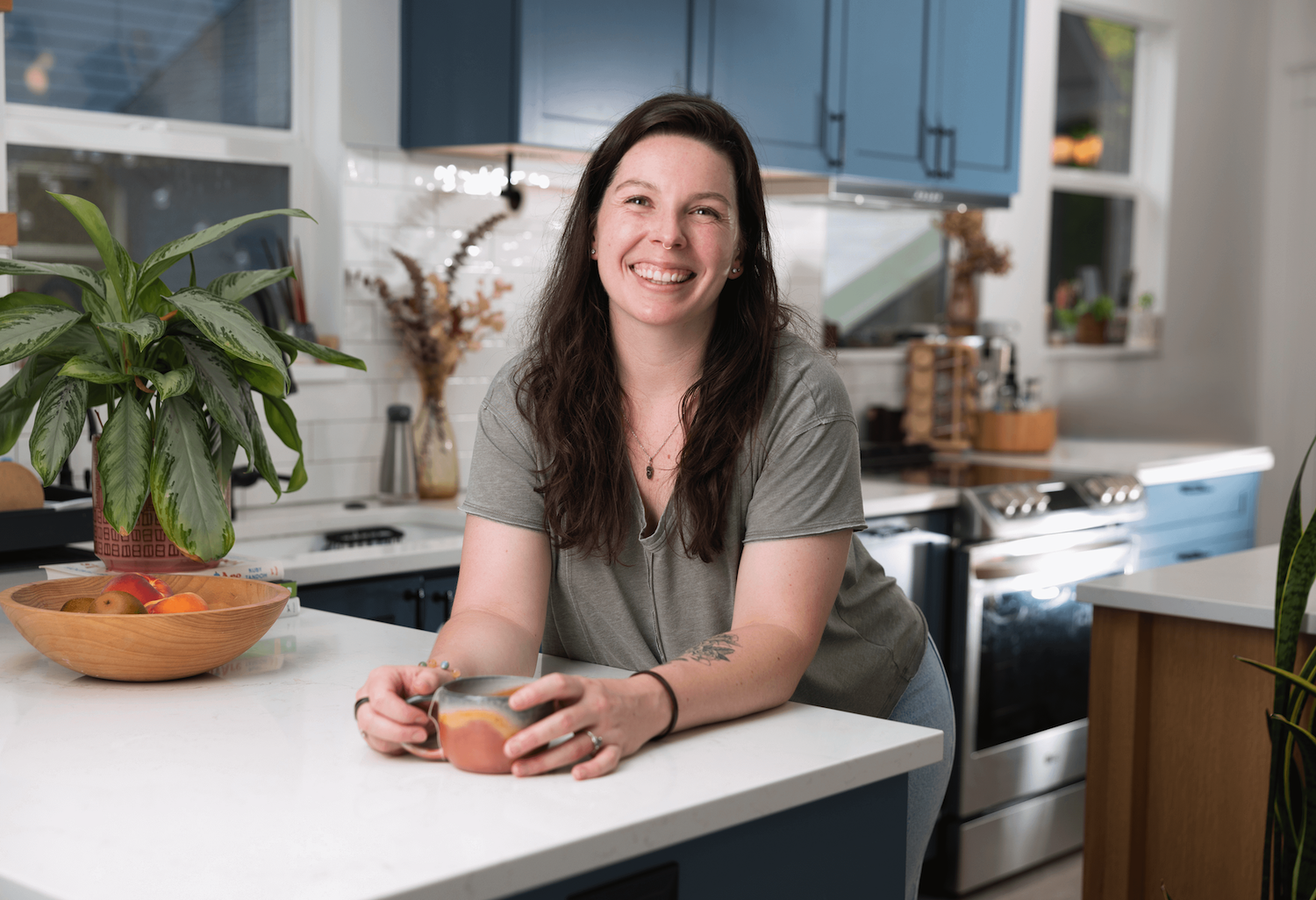
Kaitlyn Carroll (she/her) is a National Board Certified Health and Wellness Coach and the founder of Sacred Vessels. She writes at the intersections of of science, spirituality and self-inquiry with radical honesty, curiosity and compassion.
This is the fifth essay in a 5-part manifesto series. Read the rest here: